

Seafood is an iconic part of Lunar New Year celebrations in Chinese culture and boy do they know how to cook it beautifully.
If you’re planning on celebrating the start of the Year of the Horse, or just want to try some delicious traditional Chinese dishes, we’ve got the species recommendations
for you!
WHOLE FISH
Species recommendation · Coral Trout. Ocean Perch. Alfonsino, Ruby Fish, Imperadore.
Whole fish is the single most important cultural dish eaten on Lunar New Year.
The tradition of eating whole fish at this special occasion arose as the pronunciation of the Chinese word for “fish” also means “abundance”; therefore, this dish is symbolic of wellbeing and prosperity in the year ahead. Preparing and serving the fish whole is said to represent a good start and finish to the new year (head to tail!). Bonus for any red coloured fish which symbolises good fortune.
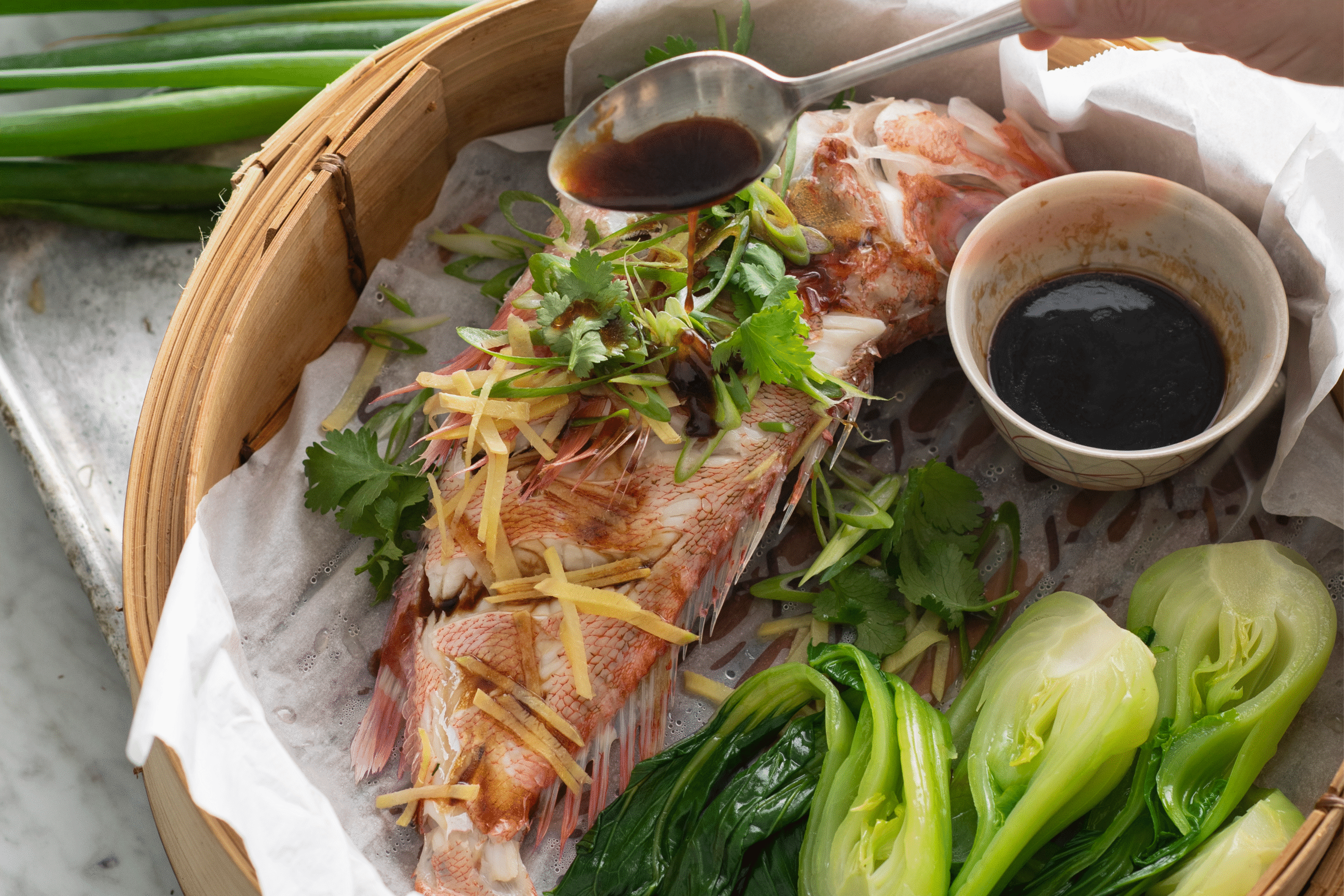
The traditional cooking method is steaming, topped with soy sauce, ginger and green onions. Hot seasoned oil is then poured over the top, to activate the aromatics and crisp up the skin.
Superstition says it’s bad luck to turn a fish over, so instead, lift the bones out once one side is fully eaten, and access the bottom side that way. Need recipe inspiration? We’ve got you! Try our Steamed Ocean Perch with Ginger and Soy.
ABALONE
Abalone is a revered species in Chinese culture, representing good fortune for the year ahead. Traditionally, Abalone was served among families on the fifteenth day of the Lunar New Year to mark the end of the holiday, but now it is served on any day during the fifteen days.
Abalone is a highly sought-after ingredient, meaning that in Australia, you will sometimes see it priced accordingly! At Sydney Fish Market, you can have Abalone cooked fresh for you in your choice of sauce (we recommend ginger and shallot or XO!). You can also find Greenlip Abalone sliced and served in it’s beautiful shell as sashimi. A great addition to your LNY feast.
Pipis
Pipis are a popular choice for Lunar New year just like most clams and shellfish for their shape, symbolising ancient Chinese currency.
You’ll commonly find them served in XO sauce. XO sauce is an iconic condiment hailing from Hong Kong, made from dried seafood, salty ham, shallots, garlic, chilli, and oil. It is a real flavour bomb that can be spooned over any number of dishes to add a rich umami taste.
It’s name, “XO”, is Hong Kong shorthand for high quality, prestige, and luxury, making it the ideal sauce to enjoy on a special occasion like Lunar New Year.
Lobster
There are so many great commercial species of Rock Lobster in Australia: Eastern, Western, Southern, and Tropical.
While they vary in size and appearance depending on the region in which they were caught, they all share a famously sweet flavour profile that makes them one of the most revered Aussie seafood species.
Enjoyed in a variety of ways., Lobster is a great addition to add to your seafood noodles which are a key element of any Lunar New Year feast – the length of the noodles represents the longevity of one’s life, and they are therefore very culturally important. You’ll find a variety of fishmongers at Sydney Fish Market offering Lobster noodles, cooked to order.
Or give Char Kway Teow a try. It is a popular dish in Singapore, China, and Malaysia, and can be made with a varied combination of whatever seafood is freshest.
Crab
Crab is a fantastic centrepiece to a Lunar New Year feast, and its bright red hue is a symbol of prosperity and good luck! Chilli Crab is a dish enjoyed in many Asian cultures, and while each country has its own take on the recipe, it is always guaranteed to be delicious.
If you’re visiting us for Lunar New Year, ask your favourite retailer which crab they recommend on the day – Mud Crab is a traditional classic, but they may have some King Crab on offer if the supply has been good – and ask to have it cooked in Chilli Sauce. Enjoying this dish is a decadently messy affair, so grab some napkins and be prepared to dig in with your hands! You can even learn how to cook this iconic dish in the Sydney Seafood School’s Singapore Chilli Mud Crab class.