Description
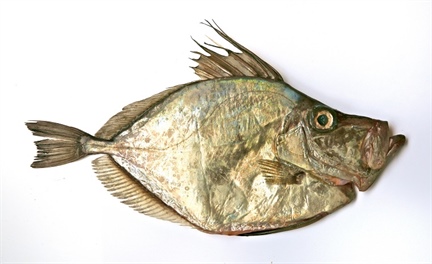
Available wild caught, it is a bottom-dwelling marine fish found mainly on the outer shelf and upper continental slope commonly between 200-500m, it is widespread around the Australian coast, except for northern Queensland, Northern Territory and northern WA, and caught by trawling off the south-eastern coast of NSW and Victoria, with some off SA and WA as far north as Exmouth. Its skin is silver and smooth, with very few, fine scales.
Price
Medium priced.
Relations
John Dory, King Dory, Silver Dory. Also closely related to Oreodories, including Black, Smooth, Spikey, and Warty Oreodory.
To Buy
Sold whole (gilled and gutted) and in fillet form (usually skin on). In whole fish look for lustrous skin, firm flesh, and a pleasant, fresh sea smell. In fillets, look for pale pinkish, firm, lustrous, moist flesh without any brown markings or oozing water and with a pleasant fresh sea smell.
To Store
Make sure whole fish is gutted and cleaned thoroughly. Wrap whole fish and fillets in plastic wrap or place in an airtight container. Refrigerate for up to 3 days or freeze whole fish for up to 6 months, and fillets for up to 3 months, below -18ºC.
To Cook
Average yield is 35%. Has a mild flavour, low oiliness and moist, medium textured flesh with fine flakes and few bones, which are easily removed. The edible, scaleless skin can be left on.
Cooking Methods
Steam, poach, deep-fry, pan-fry, bake, grill, barbecue. Fillets are thin and, to protect them when barbecuing or grilling, best wrapped in foil or banana leaves.
Goes Well With
Butter, citrus, fresh herbs (such as chives, coriander, dill, French tarragon, parsley, thyme), olive oil, white pepper, white wine.
Imports
Chilled fillets are imported from New Zealand. Basa, a freshwater farmed catfish imported from Asia, is sometimes marketed as ‘Pacific dory’, though it is unrelated to the Dories.