Description
Available wild-caught (though there are some aquaculture trials for Soft Shell Crabs in Queensland), it is a coastal marine dweller found mainly in bays, estuaries and intertidal areas up to about 60m, most commonly on muddy or sandy bottoms but also on rubble, seagrass and seaweed.
Found around most of the Australian coast, 50% of the commercial catch is from southern Queensland with the remainder mostly from central NSW, SA and WA north to Shark Bay. Caught in traps, dillies and entangling devices, and as a bycatch of trawling.
Price
Medium priced.
Relations
Coral Crab, Mud Crabs, Sand Crabs, Velvet Crab.
To Buy
Crabs should feel heavy for their size and have their legs and claws intact.
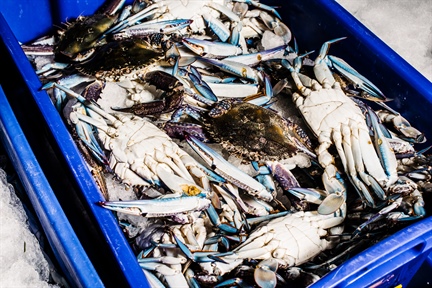
Blue Swimmer Crabs are one of the few Crabs not sold live, but are available cooked or green (uncooked), as they don’t survive well once captured.
Look for brightly coloured, firm, intact, lustrous shells, without any discolouration, particularly at joints, and a pleasant fresh sea smell. If possible, give them a gentle shake to ensure there’s no sound of sloshing water.
Females with eggs are protected in all states, and in Queensland catching any female Blue Swimmer Crabs is prohibited.
To Store
Wrap in plastic wrap or foil and store in an airtight container in the fridge for up to 3 days, or freeze for up to 3 months below -18ºC. Picked Crab meat can be stored in the same way.
To Cook
The male’s shell is a distinctive mottled bright blue to purple when uncooked, while the female’s tends to be more mottled brown; like all crustaceans, they turn orange when cooked (with the male’s shell remaining brighter).
Average yield is 35% (from claws and body). The flesh is translucent when raw and white when cooked, it has a mild, sweet, nutty flavour, low oiliness and is moist, evenly textured and firm (claw meat is firmer than that found in body and legs). Some people enjoy the stronger-tasting ‘mustard’ or brown meat (internal organs) in the body.
Cooking Methods
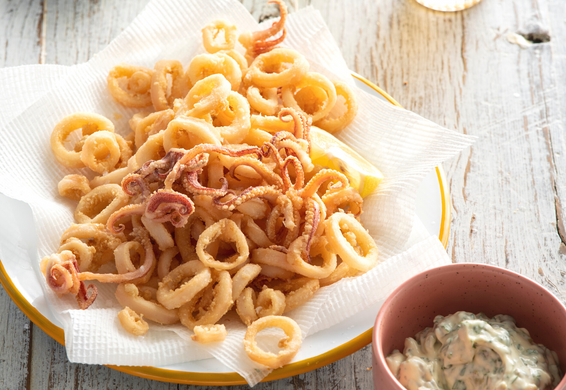
Steam, poach, deep-fry, pan-fry, stir-fry. Serve boiled Crab with Asian dipping sauces such as nam pla, or mayonnaise (flavoured with ‘mustard’, garlic, or herbs) or hot melted butter with a squeeze of lemon juice.
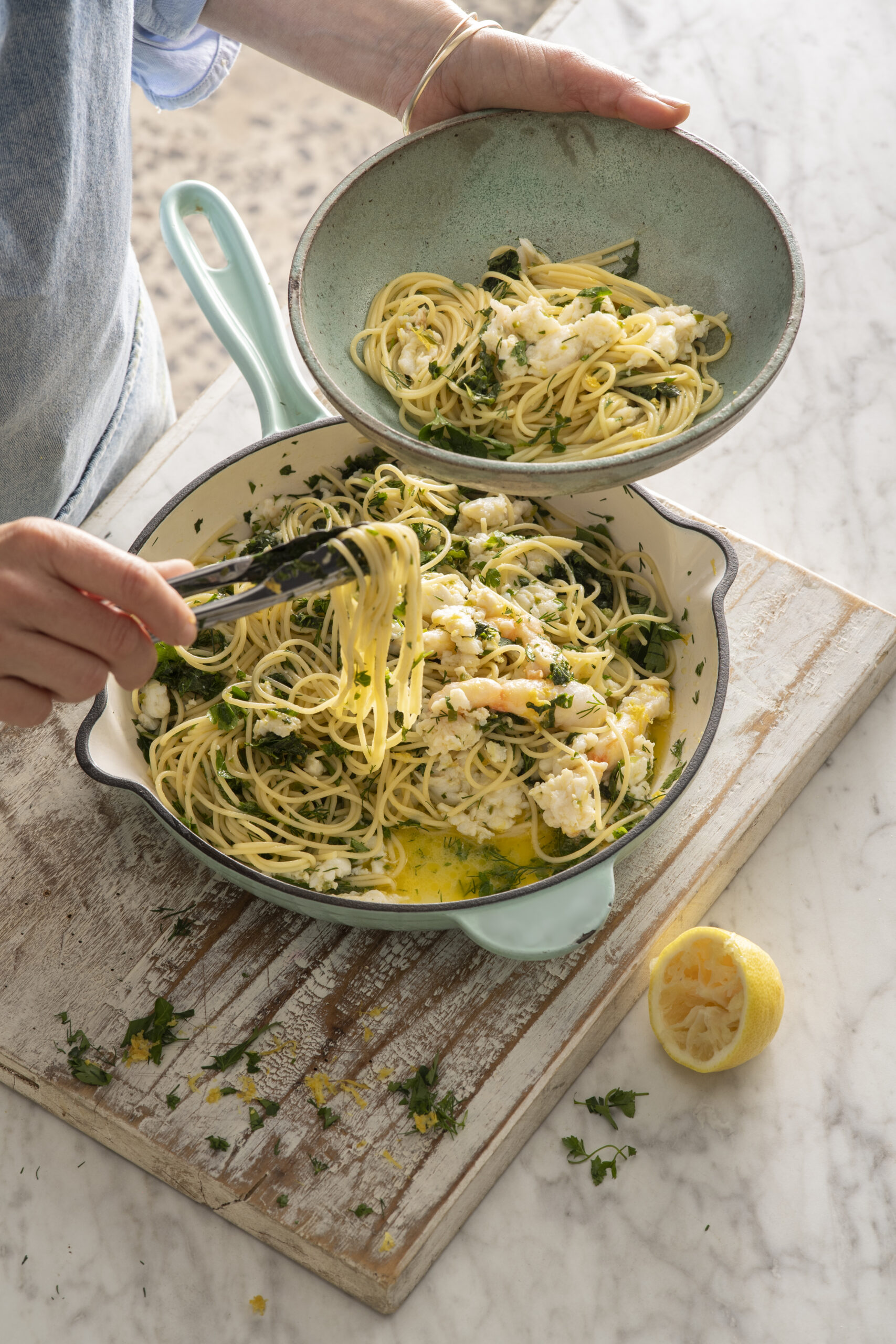
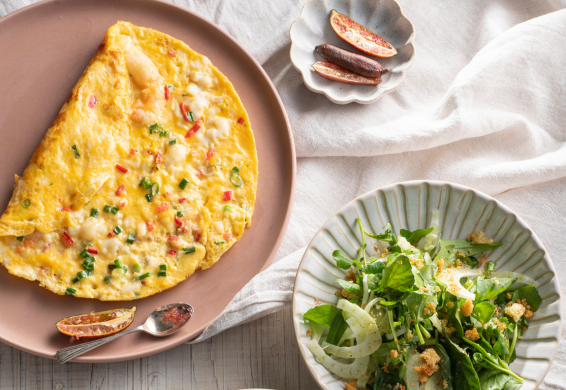
Do not recook cooked Crabs, pick out the meat and use it in salads, sandwiches, as a garnish for soups, or in dishes where it is just gently warmed, such as pasta, risotto, Crab cakes and omelettes.
Goes Well With
Anchovies, black pepper, butter, chervil, chilli, coconut, coriander, cream, dill, fish sauce, French tarragon, garlic, ginger, lemon, lemongrass, lime, mayonnaise, nutmeg, onion, parsley, soy sauce, tomatoes, turmeric.
Imports
Frozen meat from Japan and Vietnam and whole from New Zealand. ‘Blue Crab’ imported from USA is a different species (Callinectes sapidus).