
Sydney Seafood School
Welcome to Australia’s leading cooking school. From hands-on classes and engaging tastings to school holiday workshops and private events, Sydney Seafood School is ready to take your kitchen skills to the next level.
Our facilities feature a tiered auditorium, fully equipped cooking benches, a spacious dining room, dedicated event space, and a team of experienced staff eager to share their seafoodie wisdom.
Discover

Book an Experience
Recipe Collection
School Programs & Excursions
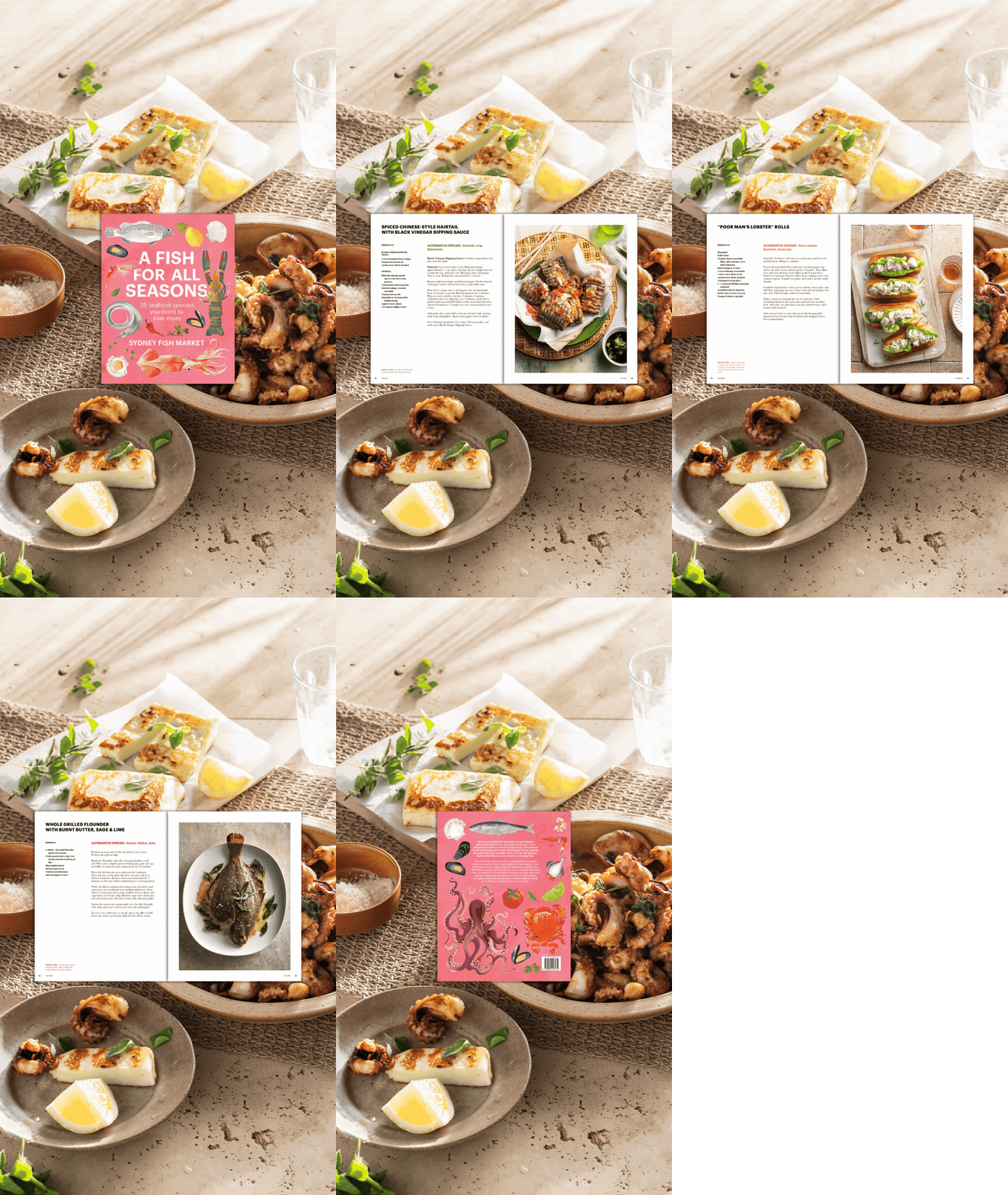
‘A Fish For All Seasons’ Cookbook
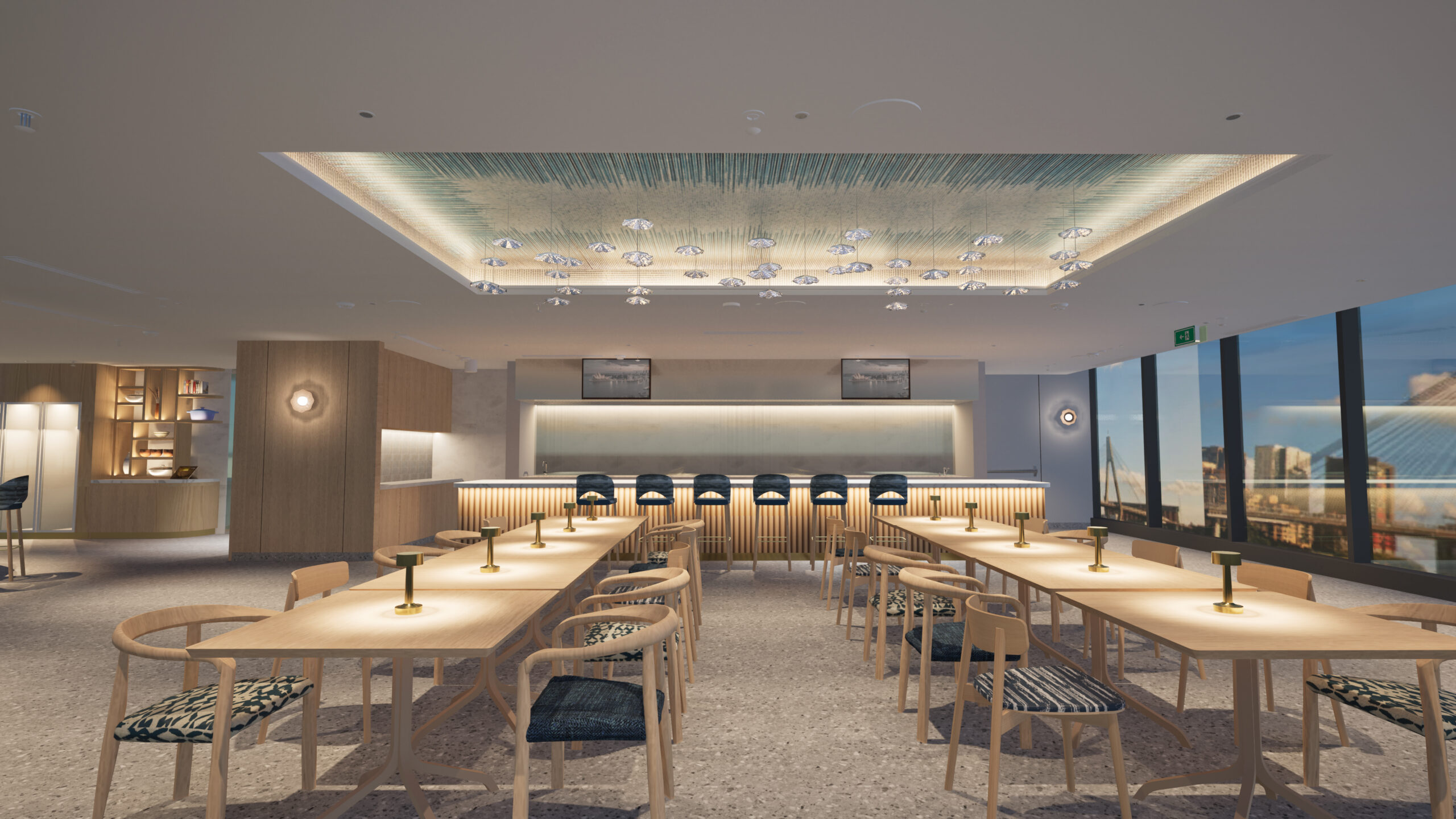
Private Cooking Classes

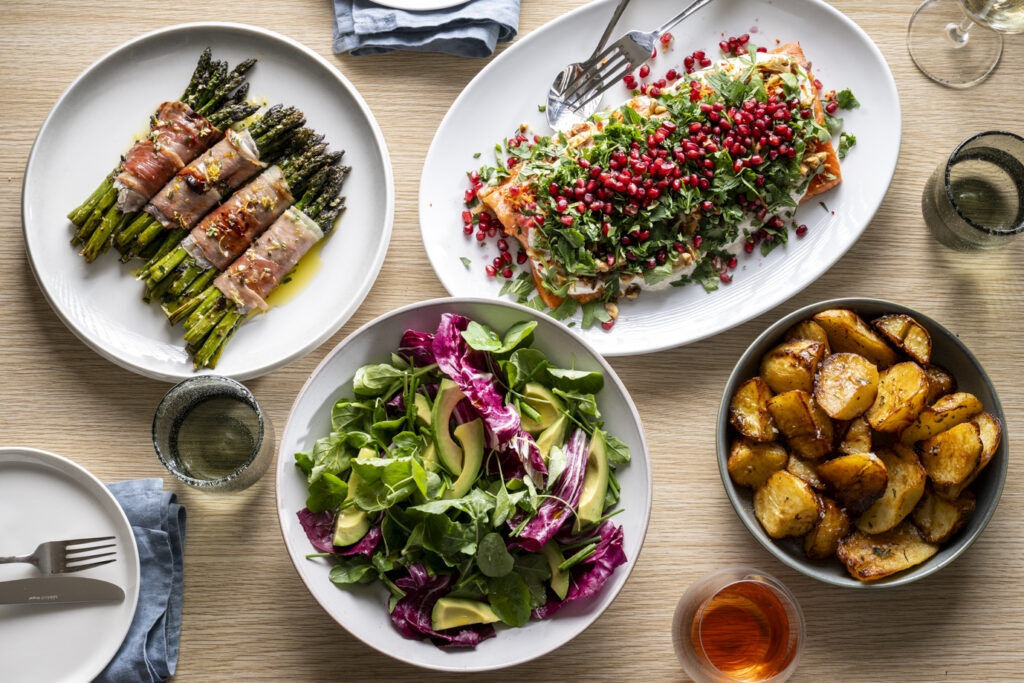
Indulge
Private Cooking Classes
We’d love to welcome you to our state-of-the-art venue for a fun, customisable cooking experience, perfect for work Christmas parties, corporate team building, family reunions, hens’ nights, and birthday celebrations. Contact us to learn more.
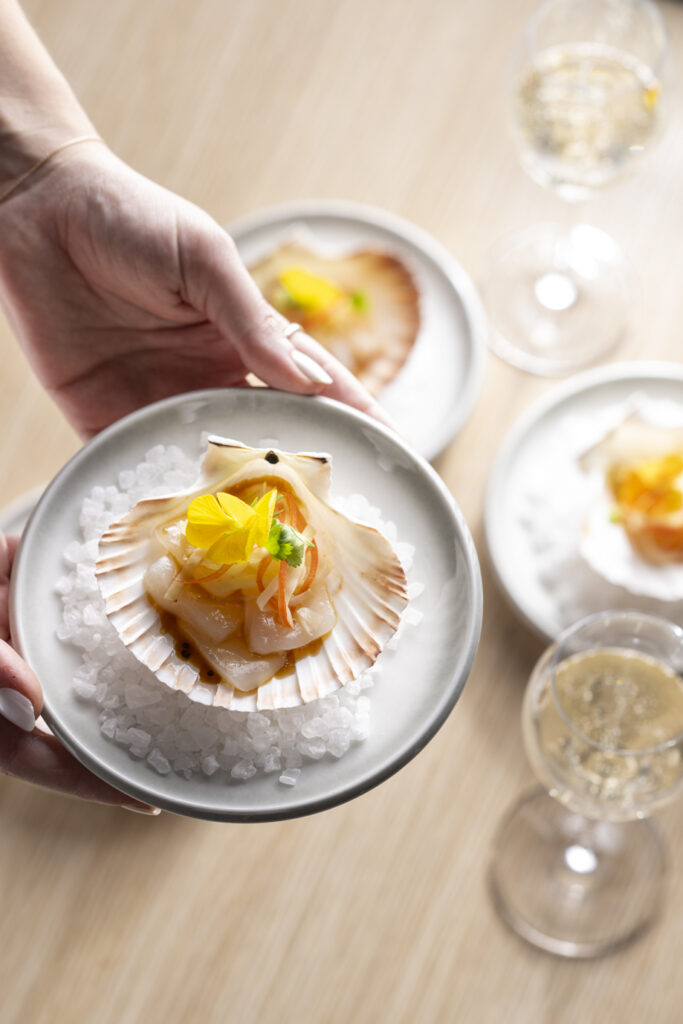
sydney seafood school
Events
Gather and celebrate in style at Ngara at Sydney Seafood School, our dedicated event space overlooking Blackwattle Bay. We cater for cocktail parties, lunches, dinners, private parties, corporate meetings, product launches, activations and more in our stunning harbourfront spaces.
Enjoy seafood-forward menus showcasing the freshest daily catch from Sydney Fish Market and the best of NSW produce.
Share
Gift Cards & Foodie Gifts
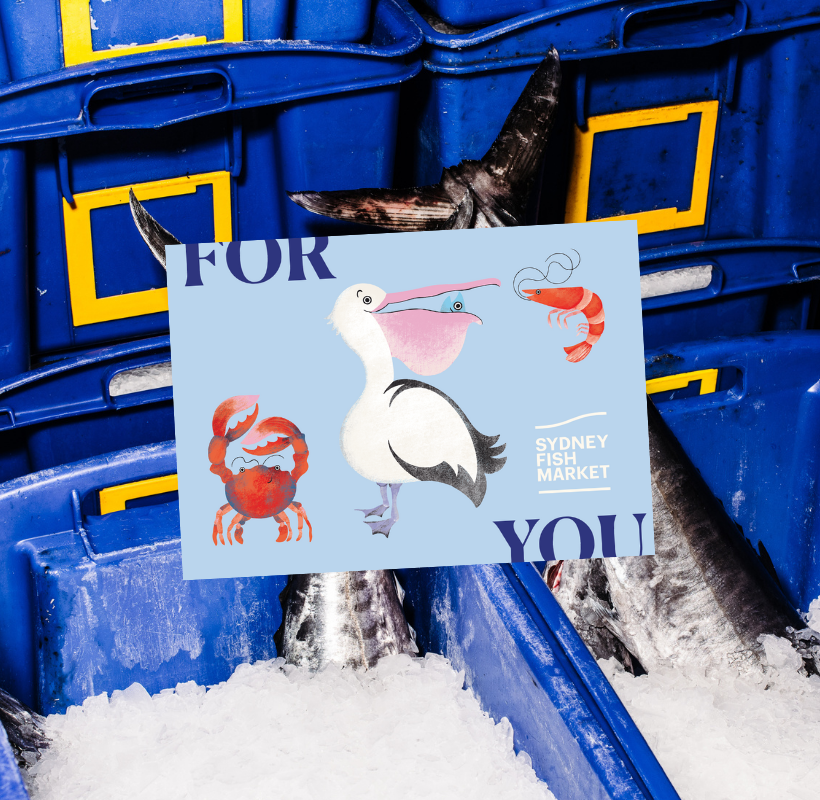
Searching for the perfect gift for the foodie in your life? We offer a range of food-related gifts. Why not combine with a Sydney Fish Market Experience gift card.
Ask
FAQs
Sydney Seafood School is located on the Mezzanine Level of Sydney Fish Market, 1 Bridge Road, Glebe. Take the escalator to the Mezzanine Level and turn left to the Sydney Seafood School doors.
Parking is available in the Sydney Fish Market car park. There is no discounted rate for parking for Sydney Seafood School guests. We recommend catching public transport.
Yes. Guests aged 15+ may attend unaccompanied. Children aged 12–14 may attend with an accompanying adult. Specialised kids’ classes are available for ages 7–13.
Bookings are non-refundable. Bookings can be rescheduled or reissued as a credit voucher (valid 12 months) up to 72 hours prior. Less than 72 hours’ notice or no-shows are non-refundable, although you’re welcome to send someone in your place.
If we need to cancel a class due to minimum numbers not being met, or other unforeseen circumstances, we’ll notify you and a 12-month credit or refund will be issued.
Gift cards are available and can be purchased via the “Gift Shop” page.
No group discounts are currently available. However, private classes for companies or groups can be arranged.
All classes begin in our tiered auditorium with a live cooking demonstration by one of our experienced team members. The second half is your hands-on cooking session at a fully equipped cooking bench, where you recreate the demonstrated dishes with our team on hand to assist. At the end, sit down and enjoy your creation with a complimentary drink.
Often, yes. Some classes are naturally gluten-free or dairy-free, and the team can discuss possible adjustments. We recommend calling 02 9004 1111 before booking if you have specific dietary needs.
Each fully equipped cooking bench accommodates up to 6 guests.
Classes range from AU$90–$300, depending on class length and inclusions.
Bring a pen if you’d like to take notes, wear enclosed non-slip shoes, and consider bringing a container for leftovers. The School provides everything you need as well as a recipe booklet and apron to take home.
No. BYO is not permitted. Guests typically receive a complimentary drink on arrival and another with the meal. Alcohol cannot be supplied to guests under 18.
The cardinal rule is don’t overcook it – overcooking spoils the flavour and texture of fish. Fish is done as soon as it loses its translucent appearance and turns opaque (generally white) all the way through. To check, insert a fork into the thickest part and gently divide it; if it flakes easily it’s cooked. With a whole fish or cutlet, the flesh should come cleanly away from the backbone.
Pat the skin with paper towel to make sure it’s as dry as possible. Sprinkle with salt and pepper (some chefs say a thin dusting of plain flour helps too). Get your pan to a high heat, add a small amount of oil then put the fish in skin-side down and gently press down with an spatula or fish weight to prevent the skin curling. Cook the fish three-quarters of the way through on the skin-side, you should start to see the flesh turning opaque around the edges of the fillet, indicating that it’s cooked through, then turn the fish over to just finish cooking (1-2 minutes). Don’t be afraid of a hot pan and resist the urge to turn fish too soon, and you’ll have crisp skin like the professionals.
In plate-sized whole fish, test by gently pulling on the dorsal (top) fin, it’s cooked when the fin comes out without any resistance and the eye is completely opaque. In larger whole fish look inside the belly cavity towards the backbone to check that the flesh there has turned opaque.
Crustacean shells (prawns, crabs, rock lobsters, bugs) turn bright red when cooked. Their flesh, once removed from the shell, will be opaque rather than translucent — at that point it’s done.
Bivalves (shellfish with a double hinged shell, such as Vongole, Mussels and Pipis) are among the quickest and easiest seafood to cook, as they tell you when they’re ready … by opening. Before cooking them, ensure each shell is firmly closed, or closes when gently tapped (discard any that don’t), then add them to a hot pan over a high heat, with or without a little oil, wine or other flavourings, and cover them for a minute or two, giving the pan a good shake occasionally. As soon as you hear them start to pop open, remove the lid and, one by one as they open, transfer them to a bowl. If a few stubborn ones remain, cover again for a minute or two. Any that still remain closed can be prised open over the sink and checked – if they smell good, they will be; if in doubt, discard them.
Cephalopods, as this group are known, require either very quick cooking over a high heat or very long cooking over a low heat – anything in between renders them tough. If cooking quickly, toss over a high heat just until their translucent flesh turns opaque. Otherwise, cook over a very low heat with some liquid (braising) until the flesh is tender and can be easily pierced with a wooden skewer.
If, after cooking, some shells remain stubbornly closed — traditional advice was to discard them (they may have been dead before cooking). However, if you gently pry them open away from the plate and they smell fresh, they are safe to eat. That said, always discard any mussels before cooking that were not firmly closed or didn’t close when tapped (those may already have been dead and can spoil). Also, remove mussels from the pan as soon as they open to avoid overcooking them.
Buy local – check the fishmonger display, if your seafood is Australian, it’s most likely going to be fresh and high quality!
Ask your fishmonger – Either the staff behind the counters at Sydney Fish Market or your local seafood shop are a wealth of knowledge on what is fresh and in-season.
Look and smell – look for bright lustrous skin or scales, firm flesh, bright pink-red gills, and a pleasant fresh sea smell.
Shop smart to save a buck – Seafood doesn’t have to be expensive. Save money by purchasing lesser-known species (due to supply and demand, these are often cheaper than your classic Snapper, Barramundi, or Atlantic Salmon), purchase whole fish instead of fillets (they are surprisingly easy to cook, either in the oven or on the BBQ), and go for smaller specimens (smaller prawns and oysters).
Transport – Bring a chiller bag or esky, and ask your fishmonger to pack some ice with your purchase. Put it in the fridge as soon as you get home. Most species will keep for 3-5 days in the coldest part of your fridge. If you’re unsure, ask your fishmonger.
Buying species that are in season and asking your fishmonger for recommendations are two great ways to get a bargain while still eating fresh Australian seafood.
Whole fish are always better value than fillets or cutlets, as you aren’t paying for the fishmongers’ time to fillet and prepare them – the bonus is that fish on the bone has more flavour. Some whole fish that offer particularly good value are: Australian salmon, mullet, luderick, bight redfish, gemfish, silver warehou, eastern school whiting and garfish.
If you do want to buy fillets, look out for species such as mirror dory, redfish, gemfish, oreodory, morwong, leatherjacket, Australian sardines and albacore.
For great value shellfish, consider cuttlefish (almost identical to squid often at half the price), pipis, vongole and blue mussels.
This has been a passionate argument between fish lovers since the advent of aquaculture. Everyone has their preferences, but there are a few important things to consider when choosing between wild or farmed fish.
- Sustainability
While Australian fisheries are exceptionally well-managed, and commercial catch limits are constantly revised to ensure populations remain strong, wild-caught seafood species can still (very rarely) be subject to overfishing.
Aquaculture species never have this problem, as they are grown and harvested according to consumer needs. Some species, such as Murray Cod and Silver Perch, are only available via aquaculture due to the strict management of wild populations, meaning you can be absolutely certain you are making a sustainable choice.
- Flavour
Some people believe that wild-caught and farmed seafood taste markedly different, and while sometimes this is personal opinion, for some species it is objectively true. Kingfish, for example, are farmed in colder waters than they are naturally caught, and farmed Kingfish is therefore often fattier, and more flavourful, moist and tender.
In general, farmed fish are usually fatter than their wild counterparts due to not having to hunt as hard for their food, so if fattier fish is your preference, you may like them better!
- Supply and Availability
While wild-caught seafood is subject to any number of outside influences – weather, catch limits, and seasonality being just a few – aquaculture species are generally in consistent supply year-round. This is especially convenient when it comes to busy industry periods like Christmas and Easter, as it ensures there will always be enough prawns to go around, no matter what factors influence the wild-catch sector.
Furthermore, aquaculture allows us access to species that are not naturally found in Australian waters, such as Atlantic Salmon, but are also not imported. It is important to choose Australian whenever you can when it comes to seafood, so this provides a good option if you want to try species that would otherwise come from overseas.
Overall, the best way to figure out whether you prefer wild-caught or farmed seafood is to try both, and decide for yourself!
With such a wide variety of fresh Australian seafood available, it’s always best to be open to substitution in recipes. A particular species may be out of season, making it unavailable, not at its best, or expensive, whereas a similar species, in season, may be a much better (and more economical) choice.
If in doubt, tell your fishmonger how you’re planning on cooking the fish, or what species the recipe calls for, and ask their advice. They work with seafood all year round and probably eats more of it than most people, so they are in a good position to advise.
Note: All the recipes on our Recipes page list alternative species; type ‘Snapper’ into the search box and recipes for Snapper, Blue-eye Trevalla, Bream and several other species will be listed, as Snapper can be substituted for those species in those recipes.
Fresh Australian seafood is largely a product of wild harvest, and its supply is therefore heavily affected by seasons and weather. Prices, by extension, are driven by supply and demand, much more so than prices of shelf-stable commodity foods.
Most fresh Australian seafood consumed in Sydney is bought through Sydney Fish Market’s daily auction where buyers bid for the fishermen’s catch. If there’s an abundance of a particular species, the price will be lower as there’s enough to go around. But if a species is scarce, the buyers will drive the price higher in an attempt to outbid one another for the little that’s available. Increased demand over Christmas, Easter and other public holidays also therefore drives prices higher.
Firm, white-fleshed fish are a popular choice for many recipes as their flavour isn’t as distinctive as pink or red-fleshed fish, like Salmon and Tuna, and their firm texture means they hold together well in all sorts of preparations.
Ling, Blue-eye Trevalla, Swordfish, Emperors, and Mahi Mahi are just some fish with firm, white flesh.
With so many species of fish in the ocean, many can be substituted for one another, which is good news for the cook. If a recipe calls for a species which is unavailable, or too expensive, on the day you’re shopping, tell your fishmonger how you plan to cook it and ask them to suggest a suitable substitute.
White-fleshed fish generally have a milder flavour than dark-fleshed fish. Ling, for example, is a good option for kids as it has a mild flavour and very few bones. Other mild-flavoured fish include leatherjacket, flathead, whiting, flounder, sole and dory.
Those who like red meat often enjoy tuna steaks as they have quite a meaty texture and flavour and again, no bones.
Some ingredients can also help to mask fishy flavours, such as ginger in Asian dishes or Mediterranean ingredients such as tomatoes and capsicum.
Seafood will stay fresh longer if it’s kept cold. When shopping for seafood use a chiller bag or esky and ask your fishmonger to pack some ice with your purchase, or bringing your own icepack will help.
Meet
Our Partners









Follow Us


Our website has had an upgrade! Booking a class is simple. Browse the program or check the calendar for available dates. You can also enquire about private classes or events, or explore our recipe collection for weekly dinner inspiration.


The new Sydney Fish Market is officially open for business. We can`t wait to welcome you into our space. If you are visiting the market make sure to look up to see us on the Mezzanine Level.
Building images courtesy of Tom Roe.

It’s almost time for the new Sydney Seafood School to open its doors. Cook, connect and celebrate in our brand new space. Explore the full class schedule and be among the first to sharpen your seafood skills.

POV: your camera roll after attending a Sydney Seafood School Class.

Get your Seoul food fix in our Taste of Korea class. This recipe is from one of our most loved classes that will be reimagined in our new space. Don`t miss out, book your spot now.

The wait is almost over. Our new classes begin in the next few weeks, so now’s the time to redeem your gift card and secure your place. If you received one over the holiday season, what are you waiting for?

Learn how to fillet like a pro in a range of our classes like our signature Fillet-A-Fish class. Book your spot today.

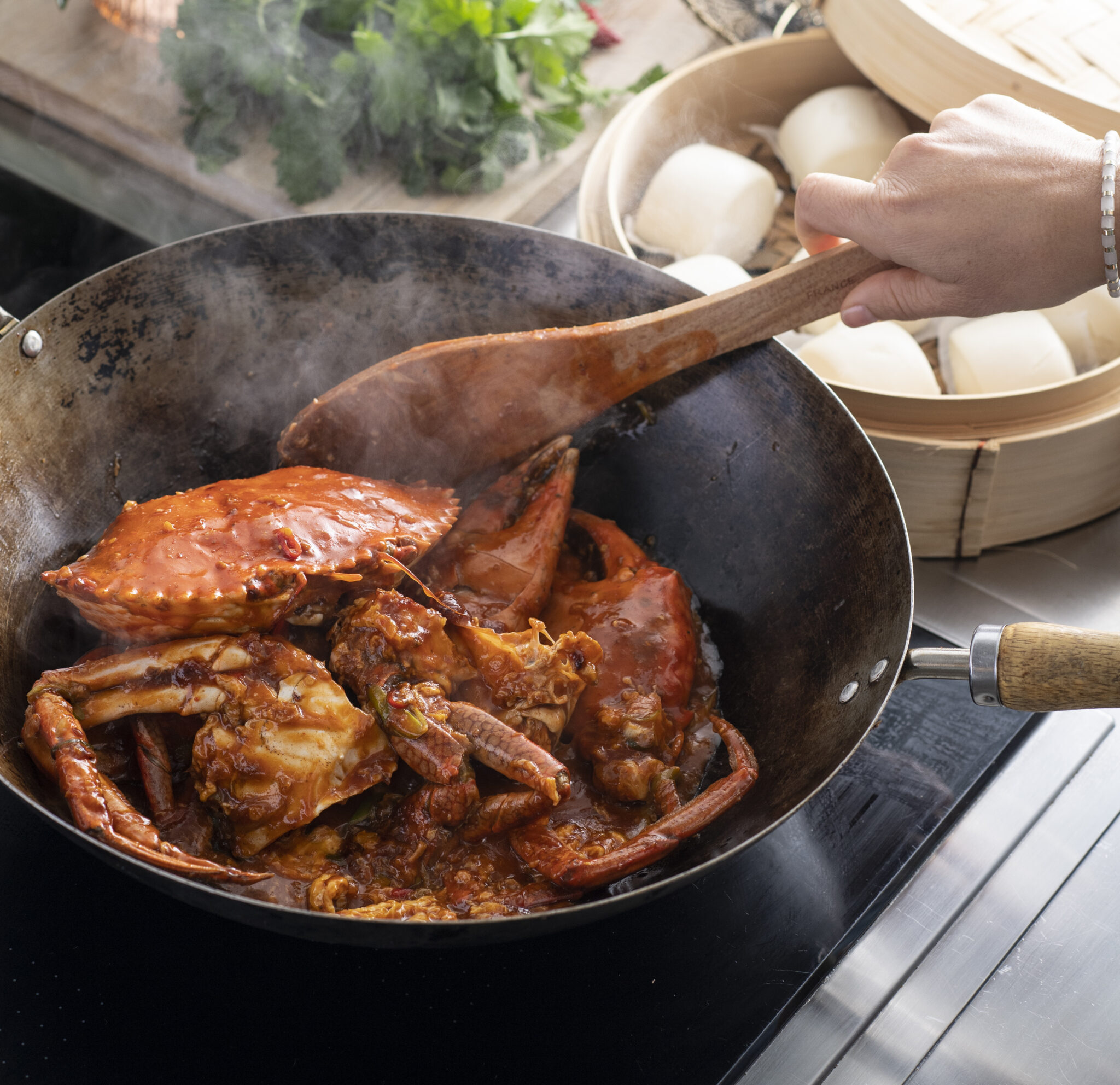
Crack the secrets of cooking crab with confidence. Learn how to prep and handle crab in our popular Singapore Chilli Mud Crab class, or put your skills to the test in our new Crab x Crab experience, where you’ll cook both Mud Crab and Blue Swimmer Crab in the ultimate dish showdown. Book your spot online now.

The best recipes are usually the most simple and in summer you don`t want to be slaving over a hot stove. This Spanner Crab pasta is light, fresh and comes together in just minutes.

Great seafood starts with knowing what’s in season. Our cookbook highlights summer species at their peak, with recipes designed to let them shine. Ready to cook with confidence? Grab a copy online or from Sydney Fish Market reception today.
